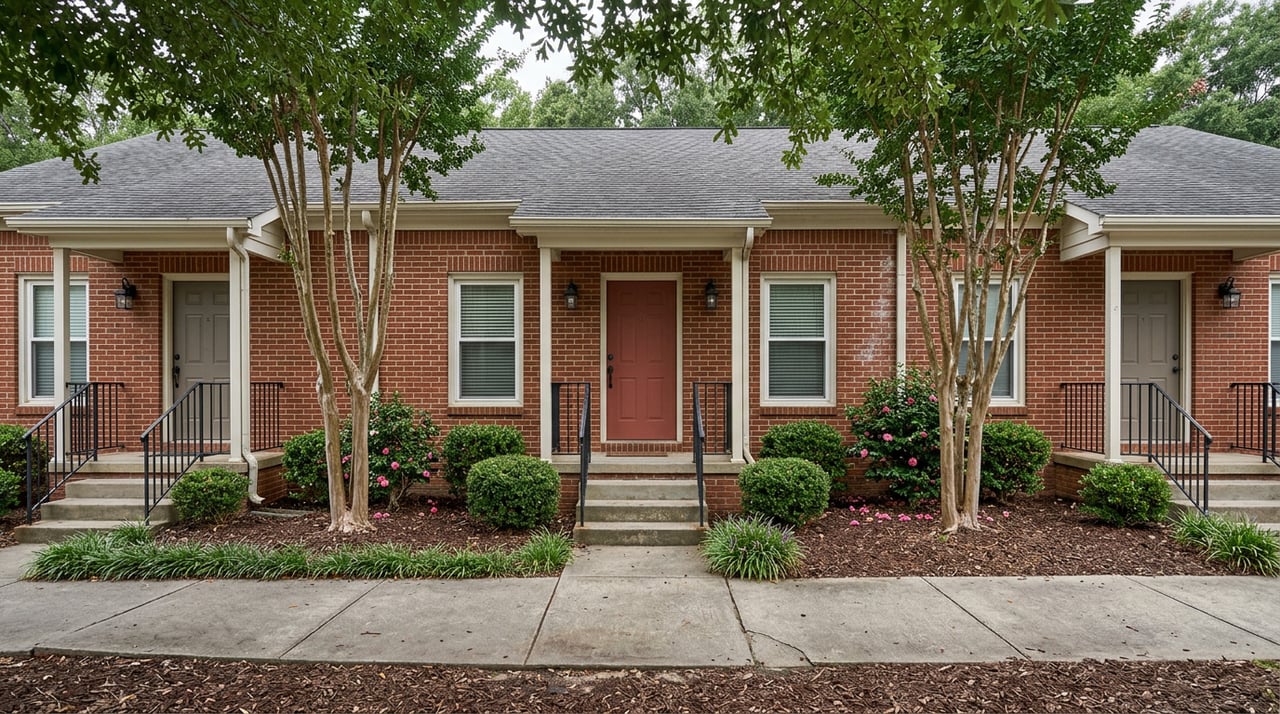
Thinking about a condo or townhome in Decatur but not sure where to start? You are not alone. Prices, HOA dues, and financing rules can feel like a maze when you first look. In this guide, you will get a clear picture of what condos and townhomes cost in Decatur right now, how HOAs work, what to watch in the documents, and how financing rules can impact your purchase. Let’s dive in.
Decatur condo and townhome prices today
Decatur’s attached market spans from budget-friendly condos to new construction townhomes with premium finishes. Because sources track different things, always note the date and data type.
Condos at a glance
- As of February 2026, Redfin’s active listings show about 115 condos for sale with a median listing price near $315,000. Listings range from the low $100,000s to the mid $600,000s.
- Entry options often appear in older garden-style buildings or smaller one-bedroom units. Mid-range two-bedroom condos make up a large share of the market.
Townhomes at a glance
- As of February 2026, Redfin’s active listings show about 149 townhomes with a median listing price around $540,000. You can still find older or farther-out options under $300,000, while newer builds can reach the high $700,000s.
- Townhomes tend to cost more than condos in Decatur because they are larger, often include garages, and have lower-maintenance living with more space.
Why sources differ
Market trackers use different geographies and metrics. For example, city-limit filters vs postal ZIP areas will change the mix of homes. Listing medians will not match sold medians or a value index. When you compare numbers, keep the source and month consistent so you are seeing apples to apples.
What you get by price band
Condos: common ranges
- Entry/starter: low $100,000s to mid $200,000s. Expect smaller footprints and older buildings. Good for first-time buyers and downsizers prioritizing value.
- Mid-range: $200,000 to $400,000. Many two-bed, two-bath units with updates, often near transit or employment corridors.
- Upper tier: $400,000 and up. Larger footprints, boutique buildings, and locations near Decatur Square or along the Ponce corridor. Some luxury condos exceed $600,000.
HOA dues vary widely by building and amenities. Some small garden communities show dues near $200 to $300 per month. Amenity buildings can run higher. Active-adult communities that include services and some utilities can exceed $2,000 per month. Nationally, most HOAs fall in the low hundreds monthly, but local outliers exist, so always verify what the fee covers. For broad context on HOA dues, see industry research on typical ranges and variability from iPropertyManagement’s HOA statistics resource: industry HOA research on typical ranges.
Townhomes: common ranges
- Entry: about $150,000 to $300,000. Often older complexes or units with longer commute distance.
- Mid-range: $300,000 to $600,000. Many modern townhomes with 3 bedrooms, 2.5 baths, and attached garages.
- Upper/newer: $600,000 and up. Newer infill with two-car garages, premium finishes, and sometimes rooftop decks.
Townhome HOA dues in Decatur often cover exterior maintenance, landscaping, and common-area insurance. Many fall between $100 and $400 per month, though fees increase with gated entries or pools. Always confirm the line items and master insurance coverage.
Inventory and speed
Inventory has increased from the very tight conditions seen in 2020 to 2022, which generally gives buyers more options and time to compare. Recent trackers show median days on market in the 80 to 140 range depending on source, month, and property type. Lower-priced condos can move faster than higher-priced townhomes or luxury condos. If you are targeting popular price points, have your pre-approval and HOA questions ready so you can act confidently.
HOA costs and what they cover
HOA dues are not one-size-fits-all. Ask for a detailed breakdown so you know what to add to your monthly budget.
- Typical coverage may include exterior maintenance, common-area insurance (master policy), landscaping, trash, and sometimes water or amenities like pools and fitness rooms. For a national view of common ranges and why fees vary, review this helpful overview of HOA statistics: national HOA statistics.
- Insurance matters. Master policies differ, and you still need your own condo policy (called HO-6) to cover interior finishes, personal property, and loss assessment. This explainer shows how master policies and HO-6 coverage work together: what master policies and HO-6 typically cover.
- Special assessments can add to your costs if reserves are low or major work is planned. Always review the budget, reserve study, and meeting minutes before you finalize an offer.
Financing and project approvals
Financing a condo or townhome goes beyond your credit and income. The project itself must meet certain standards, which can expand or narrow your loan options and your future buyer pool.
FHA and VA
Many first-time buyers use FHA or VA loans. These programs look at the condominium project’s approval status. If a condo is not currently approved, you may explore single-unit approvals or alternative financing, but the process can affect timing and terms. Learn more in HUD’s FHA information hub: FHA condo guidance and resources.
Conventional financing and warrantability
Fannie Mae and Freddie Mac have project standards that lenders must check. Key triggers that can make a condo project non-warrantable include high investor concentration, large single-entity ownership, insufficient reserves, serious litigation, or too much commercial space in the building. If a project is non-warrantable, you may need a larger down payment or a portfolio lender. For a clear overview, review Fannie Mae’s project standards: Fannie Mae project standards and Freddie Mac’s guidance: Freddie Mac Condo Project Advisor FAQ.
Due diligence checklist you can use
Use this quick, practical checklist to keep your search focused and your risk low.
- Pick your price yardstick. Decide if you will use median listing, median sold, or a value index for your comparisons, then stick with that source and date.
- Budget the full payment. Add principal and interest, HOA dues, property taxes, and your HO-6 policy. Ask for a current HOA budget and any recent assessments.
- Confirm loan options by project. Get pre-qualified and ask your lender to check FHA/VA approval or conventional warrantability for the specific condo or townhome community. See HUD’s FHA resources for how approvals work: FHA condo guidance and resources.
- Order the HOA packet early. You or the seller may order a resale certificate or closing letter that shows dues, delinquencies, and assessments. Here is a helpful explainer on what these resale certificates include: what to know about resale certificates.
- Review required condo documents. Georgia’s Condominium Act requires certain documents be provided to buyers. Read them and ask questions within your review period: Georgia Condominium Act, OCGA §44-3-111.
- Verify insurance details. Ask for the master insurance declarations page and note the deductible. Get an HO-6 quote that includes loss assessment.
- Scan the minutes. Read 6 to 12 months of HOA meeting minutes for signs of big projects, litigation, or budget pressure.
- Understand taxes. Property taxes vary by location and exemptions. DeKalb County explains calculations and homestead policies here: DeKalb County property appraisal FAQs.
Neighborhood notes that shape value
- Downtown Decatur and the Ponce corridor. This area offers the highest walkability and the densest cluster of condos and small loft conversions. Units here command premiums for convenience to restaurants, shops, and MARTA.
- Oakhurst and East Lake. You will find townhomes and cottage-style condos mixed among single-family streets. Expect pricing to reflect strong neighborhood identity and local amenities.
- North Decatur and surrounding postal areas. Some listings with a “Decatur” address are outside the City of Decatur. City limits versus postal address can affect taxes and local services. Confirm which jurisdiction you are in before you estimate monthly costs.
Condos and townhomes vs single-family homes
Townhomes in Decatur often price near single-family medians because of their size and finishes, while condos usually provide the lowest entry point to intown living. The ownership tradeoff is predictable. Condos and townhomes reduce hands-on maintenance, since associations handle exteriors and common areas. In return, you pay monthly dues and accept association rules. Single-family homes give you more control over projects and timing, but you cover roof, siding, and yard work directly. When you compare options, put the HOA next to a realistic estimate of exterior maintenance so you see the true monthly picture.
Tips for first-time buyers and downsizers
- First-time buyers. Focus on buildings with healthy reserves and clear financing paths. A warrantable condo or a townhome with consistent sales can make financing and future resale smoother. Start your search in price bands where days on market give you time to negotiate.
- Downsizers. Look for single-level living, elevator access if needed, and HOA coverage that saves you time. In many cases, the convenience of walkability and lower maintenance outweighs a higher HOA if you factor in saved repair costs and your lifestyle priorities.
- Everyone. Keep flexibility in your budget for insurance and assessments, and choose communities with clear documents and stable financials. The cleaner the HOA profile, the more confident your purchase will feel.
How to move forward with confidence
If you want a calm, practical plan tailored to your budget and lifestyle, I can help you narrow the right buildings and communities, line up your financing path, and review HOA documents side by side. Reach out to schedule a quick consult, and we will map the route from first showing to closing.
Ready to explore? Connect with Angela Eschbach for a friendly, data-backed plan for your Decatur condo or townhome search.
FAQs
What are 2026 Decatur condo prices right now?
- As of February 2026, Redfin’s active listings show about 115 condos with a median listing near $315,000, with options from the low $100,000s to the mid $600,000s.
How do 2026 Decatur townhome prices compare?
- As of February 2026, Redfin’s active listings show about 149 townhomes with a median listing near $540,000, with older options under $300,000 and new builds up to the high $700,000s.
How much are typical HOA dues for Decatur condos and townhomes?
- Many condos and townhomes fall in the $100 to $400 per month range, but amenity-heavy or service-included communities can be higher, so confirm the line items for each property.
What should I review before buying a Decatur condo?
- Ask for the resale certificate, HOA budget and reserves, master insurance declarations, recent meeting minutes, and the Georgia-required condo documents outlined in OCGA §44-3-111.
How do I check if a Decatur condo is FHA approved?
- Your lender can verify the project’s status, and you can learn more about approvals and single-unit options through HUD’s FHA resources: FHA condo guidance and resources.
What can make a condo project non-warrantable for conventional loans?
- Common triggers include high investor share, large single-entity ownership, insufficient reserves, serious litigation, or too much commercial space per Fannie Mae and Freddie Mac project standards.
Do Decatur property taxes differ for condos and townhomes?
- Taxes depend on assessed value, location, and exemptions; use DeKalb County’s guidance to understand the formula and homestead options: DeKalb County property appraisal FAQs.